How To Search for Boulder Property Records
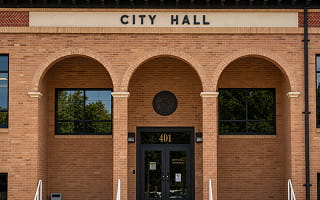
Property records provide vital information on land ownership, property boundaries, tax assessments, building permits, legal filings, and other details that help investors, buyers, homeowners, and real estate professionals make informed decisions. In Boulder, these records are public, meaning anyone can view or copy them. However, knowing where to look is key to accessing the right information. We have provided a detailed list of resources that you can use to search for and locate different kinds of Boulder property records below.
Boulder County Clerk and Recorder's Office

The Boulder County Clerk and Recorder is the official custodian of deeds, liens, mortgages, releases, plats, and other documents that affect property ownership in the City of Boulder. The clerk and recorder's office provides a records search tool that you can use to look up these documents online by grantor/grantee name, subdivision, document type, or document number, with additional options available to narrow search results. You may also search and request copies of these records in person at the office's recording division, located at 1750 33rd St., Boulder, CO 80301. Note that copy fees may apply. You can call (303) 413-7700 or email clerkandrecorder@bouldercounty.gov for more information.
Boulder County Assessor's Office

The Boulder County Assessor is responsible for identifying and valuing all real property in Boulder for tax purposes, making them the primary resource for property ownership, classification, and valuation information in the city. This includes ownership details, parcel numbers, assessed values, property characteristics, sales histories, tax district information, and more. The assessor's office provides a property search tool that you can use to access this information online. Searches may be done by address, owner name, street name, subdivision, account, parcel, or S-T-R (Section-Township-Range). You can also visit the assessor's office at 1325 Pearl St., Boulder, CO 80302, to get records in person or call them at (303) 441-3530 for general inquiries.
Boulder County Treasurer's Office
The Boulder County Treasurer is responsible for billing and collecting property taxes in Boulder. You can use the treasurer's property tax lookup tool to view current and prior tax bills, payment history, outstanding balances, delinquency status, and other tax-related property information. You can also visit the treasurer's office at 1325 Pearl St., Boulder, CO 80302, to search and request copies of these records in person (copy fees may apply), or call them at (303) 441-3520 for general inquiries.
Boulder County Combined Court
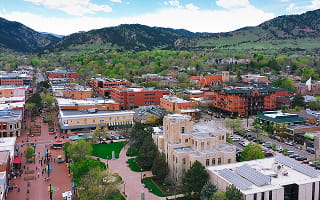
You can get property records involving legal matters, such as foreclosures, liens, boundary disputes, partition actions, and other civil cases that may affect real estate in Boulder through the Boulder County Combined Court. You can request copies of these records online by submitting a Record/Document Request Form (along with the appropriate fees) or in person by contacting the court clerk's office at 1777 6th St., Boulder, CO 80302.
City of Boulder Resources
The City of Boulder offers an online property search tool on its website that you can use to get information on properties located within city limits. Searches are conducted by address and return two types of reports: a property report and an enforcement summary report. The property report is linked to the parcel number and includes official details about the land and structures, while the enforcement summary report is linked to the address and lists any past or current code enforcement actions, such as violations, complaints, or notices. Together, these reports give a full picture of both the property's official records and any compliance issues associated with it.
Boulder Property Taxes
Boulder property taxes are used to fund various local services, including public schools, police and fire departments, emergency services, road maintenance, libraries, parks and recreation, and public transportation. The Boulder County Assessor identifies, classifies, and values properties, while the Boulder County Treasurer calculates tax bills and collects payments based on those assessments. Property values are reassessed every two years (in odd-numbered years), and property taxes are billed one year in arrears. This means that the tax you pay in the current year is actually for the previous year's obligation.
Property tax bills are typically mailed out by late January each year. Payments can be made in full, due by April 30th, or in two equal installments, with the first payment due by February 28th and the second payment due by June 15th. Partial payments are not accepted, and there are no discounts for early payment. Late payments will also accrue monthly interest plus additional penalties. If the taxes remain unpaid, the county may place a tax lien on the property and eventually enforce collection through an annual tax lien sale. The Boulder County Treasurer's Office provides several options for paying your property taxes, including online, by mail, and in person. You can call (303) 441-3520 for additional information and assistance.
![]() Assessments
Assessments

The Boulder County Assessor's Office conducts assessments to determine the taxable value of real property in Boulder. Property values are determined using mass appraisal methods, including the sales/market approach (reviewing comparable sales), the cost approach (estimating replacement cost), and the income approach (evaluating income potential for rental or commercial properties). Once a property's market value is established, it is multiplied by a state-mandated assessment rate to calculate its taxable value, which is then used to determine the final tax bill. Property values are reassessed every two years in odd-numbered years. During the even-numbered years between reassessments, the property's taxable value generally remains unchanged unless there has been a physical change, change in use, or other qualifying adjustment that affects its value.
Property owners typically receive a notice of valuation by early May of reassessment years, though a notice may also be issued between cycles if there is a significant change to the property. If you believe your property's valuation is inaccurate, you may file an appeal with the Boulder County Assessor's Office. The official appeal period typically runs from May 1st to June 9th, and appeals can be submitted online, by mail, or in person (instructions are usually provided on the notice itself). You can call the assessor's office at (303) 441-3530 for assistance or inquiries.
![]() Appraisals
Appraisals

Boulder assessments work similarly to appraisals. They both determine the fair value of property by comparing similar properties with others in the local area that have sold recently. In cases of odd structures or new construction, the county may call upon an appraiser to help determine the value. Estate planners, courts, and lenders also use appraisals to value real property.
![]() Tax Rates
Tax Rates

Boulder, Colorado, has a median effective property tax rate of 0.49%, which is significantly lower than the national median of 1.02% and also lower than the Colorado state median of 0.55%. However, the city's average annual property tax bill is $4,713, much higher than the national average of $2,400.
Here's a look at how Boulder's property tax rates compare to other counties in Colorado:
- Adams County 0.57%
- Arapahoe County 0.70%
- Cheyenne County 0.66%
- El Paso County 0.42%
- Fremont County 0.55%
- Grand County 0.46%
- Jefferson County 0.66%
- La Plata County 0.25%
- Lincoln County 0.60%
- Pueblo County 0.69%
- Rio Grande County 0.45%
- Washington County 0.30%
- Yuma County 0.67%
![]() Exemptions
Exemptions

Although Boulder's property tax rates are lower than the national average, high property values can still make annual tax bills challenging for some homeowners. Fortunately, Boulder County offers a number of exemption programs designed to reduce the tax burden for qualifying residents. These include:
-
Senior Homestead Property Tax Exemption: Available to qualifying homeowners who are 65 years or older and have owned and lived in their primary residence continuously for at least 10 years.
-
Disabled Veterans Tax Exemption: Available to veterans with a 100% permanent, service-connected disability.
-
Gold Star Spouse Exemption: Available to the un-remarried surviving spouses of service members who died in the line of duty.
Through these programs, eligible homeowners may receive a 50% exemption on the first $200,000 of the actual value of their primary residence. You can contact the Boulder County Assessor's Office at (303) 441-3530 to get more information and assistance with applying for a tax exemption.
Boulder Building Permits/Inspections
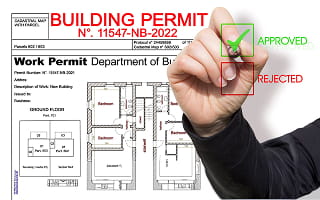
Most construction, renovation, and remodeling projects in Boulder require permits. Some cosmetic projects, such as painting, installing flooring, replacing cabinets, and certain minor renovations and repairs, may be exempt provided they do not impact a building's integrity or systems. Permits are issued by the Boulder Planning and Development Services Department, and you can apply for one online using the city's Customer Self Service Portal. You can also pay applicable fees and schedule inspections through this portal. If you prefer in-person services, you can visit the department at 1101 Arapahoe Avenue, Boulder, CO 80302, or call (303) 441-1880 for inquiries.
Common types of permits issued in Boulder include:
-
Building Permits: Required for new construction, additions, structural alterations, and major renovations for residential and commercial structures.
-
Trade Permits: Required for work on specific systems in a building:
-
Electrical Permits: For electrical installations, upgrades, and repairs.
-
Mechanical Permits: For work on HVAC systems, furnaces, and related equipment.
-
Plumbing Permits: For work involving water supply, drainage, fixtures, and other plumbing systems.
-
When applying for any of these permits, you must submit the proper documentation (building plans, blueprints, contractor licenses, materials lists, etc.). You must also pay the appropriate fee.
Building inspections are part of the permit process, and they ensure that the work complies with local building and safety codes. You can schedule an inspection through the online portal or in person at the office during regular business hours.
Real Estate in the City of Boulder
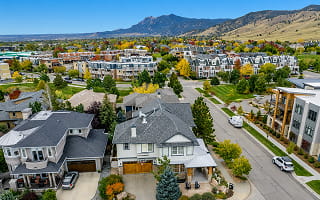
Nestled at the foothills of the Rocky Mountains, Boulder is a vibrant city renowned for its stunning landscapes and outdoor lifestyle. It is home to the University of Colorado Boulder, the flagship and largest campus of the University of Colorado system, as well as a thriving cluster of tech, research, and clean-energy companies, earning it a reputation as a leading hub for innovation and education. These attributes all contribute to the city's highly educated workforce and sustained, competitive housing demand.
Boulder, Colorado, has a population of 108,250 residents. The city has 49,329 housing units, with about 93% of these units occupied and 45% owner-occupied. The city offers a variety of housing types, including single-family homes, townhomes, condominiums, apartments, accessory dwelling units (ADUs), and eco-friendly/net-zero homes, with housing styles like Craftsman, Mid-Century Modern Farmhouse, Contemporary, Mountain Rustic, Mid-Century Modern, and Victorian. The average home price in Boulder, CO, is $923,959, representing a 2.5% decrease from the past year. However, actual home values may vary considerably depending on the neighborhood in the city. Here are some examples:
- Catalpa Park $1,275,895
- Mapleton Hill $1,248,630
- Newlands $1,623,001
- Old North Boulder $1,073,357
- West Hawthorn $1,220,717
- West Pearl $962,601
- Wonderland Hills $1,496,336
The Boulder, Colorado, real estate market is competitive and consistently ranks among the most expensive in the state; high prices are fueled by limited inventory and strong demand driven by the city's innovation economy, university presence, and outdoor lifestyle appeal. Homes typically go under contract within 47 days of listing, and about 8% of houses are sold above the listing price.
Searching across multiple government offices and databases to piece together a complete property profile can be time-consuming, but PropertyChecker simplifies the process by pulling key ownership details, tax records, transaction histories, and more into a single, easy-to-use platform. Whether you are buying, investing, or simply doing your due diligence, visit PropertyChecker.com to get the property information you need in minutes.