How To Search for Aurora Property Records
Property records are a treasure trove of real estate information that buyers and investors can use to do proper research and make informed decisions. Some of the information you can get from Aurora property records includes property boundaries, ownership history, assessed values, tax information, liens, amenities, home type, foreclosures, zoning regulations, and more. These property records are public records, which means that they are available to anyone who wants to view them or get copies. However, knowing where to look is crucial to finding what you need, especially considering that the City of Aurora spans three different counties: Arapahoe County, Adams County, and Douglas County. Below, we have provided a list of available resources that you can use to find different types of Aurora property records.
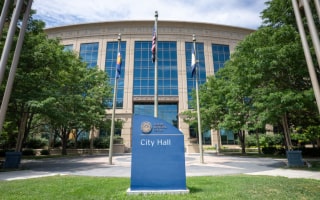
Aurora City Hall

Aurora is located within Arapahoe, Adams, and Douglas Counties. Therefore, determining the correct county for the property you are interested in is the first, and most important, step for finding property records. The City of Aurora has a property information map on its website that you can use to search for addresses within city limits to determine the specific county a property is located in. This tool also provides basic property details, location, and zoning data, and information on permits and licenses associated with the property.
County Clerk and Recorder's Offices

Aurora is spread across Arapahoe, Adams, and Douglas Counties. The Clerk and Recorder's Office in each of these counties is a good source for various property records, including deeds, mortgages, liens, plats, and other related documents. Each clerk and recorder's office offers an online records search tool that you can use to search for property records by name, document type, filing date, and property details. Note that the actual search parameters may vary by county. You can also visit the clerk and recorder's office of the county where the property is located to get physical copies of property records in person. Here are the addresses and contact numbers for the Arapahoe, Adams, and Douglas Counties' clerk and recorder's offices and direct links to each office's records search tool:
Arapahoe County Clerk & Recorder
5334 S. Prince Street
Littleton, CO 80120
(you will need to schedule an appointment online before visiting this office).
Phone: (303) 795-4200
Adams County Clerk & Recorder
Suite E2400, 1st Floor, 4430 S. Adams County Pkwy
Brighton, CO 80601
Phone: (720) 523-6020
Public Records & Recorded Documents Search Tool
Douglas County Clerk & Recorder
301 Wilcox Street
Castle Rock, CO 80104
Phone: (303) 660-7469
County Assessor's Offices

The Arapahoe County Assessor, Adams County Assessor, and Douglas County Assessor are responsible for identifying, listing, classifying, and valuing real property in Aurora. However, it is important to point out that each Assessor is only responsible for property within their respective counties. The County Assessors offer property search tools on their websites that you can use to find ownership information, recent sales histories, valuation information, building details, and more (the scope of available information may vary by county). You can initiate searches on these tools using various parameters, including name, property type, and address (once again, actual search options and the scope of information available through these tools may vary by county). You can also visit the relevant Assessor's office in person to view and get copies of their property records. Here are the addresses and contact numbers for the Arapahoe, Adams, and Douglas Counties' assessor's offices and direct links to each office's online property search tool:
Arapahoe County Assessor
5334 S. Prince Street
Littleton, CO 80120
Phone: (303) 795-4600
The Arapahoe County Assessor also operates a satellite office at Arapahoe Altura Plaza, Suite 500, 15400 E. 14th Pl., Aurora, CO 80011.
Adams County Assessor
Suite C2100, 4430 S. Adams County Pkwy
Brighton, CO 80601-8203
Phone: (720) 523-6038
Douglas County Assessor
301 Wilcox Street
Castle Rock, CO 80104
Phone: (303) 660-7450
County Treasurer's Offices

Property taxes in Aurora are collected by the Arapahoe County Treasurer, the Adams County Treasurer and Public Trustee, or the Douglas County Treasurer, depending on which county the property is located in. Each of these offices provides an online platform where you can view statements, check payment histories, identify unpaid taxes, make tax payments, and access other tax-related information. If the information you need is not available online, you can reach out to the relevant treasurer's office for assistance. Here are the contact details and direct links to the online platforms for each treasurer's office that serves Aurora, Colorado:
Arapahoe County Treasurer
5334 S Prince Street
Littleton, CO 80120
Phone: (303) 795-4550
Property Tax Information Search
Adams County Treasurer and Public Trustee
Suite C2436, 4430 S Adams County Pkwy.
Brighton, CO 80601.
Phone: (720) 523-6160
Douglas County Treasurer
100 Third Street
Castle Rock, CO 80104
Phone: (303) 660-7455
County Combined Courts

You can find Aurora property records related to legal action or disputes, such as foreclosures, liens, code enforcement cases, and partition actions, through the combined court of the county where the property is located (Arapahoe, Adams, or Douglas). You may get copies of these records (for a fee) by either completing and submitting a Record/Document Request Form online or by contacting the court clerk's office in person at the courthouse where the case was heard. Below are the addresses and contact numbers for the Arapahoe, Adams, and Douglas Counties' courthouses:
Arapahoe County
Arapahoe County Justice Center
7325 S. Potomac Street
Centennial, CO 80112
Phone: (303) 645-6600.
Arapahoe County also has a second courthouse at 1790 West Littleton Blvd., Littleton, CO 80120. Both locations can be contacted with the same phone number.
Adams County
Adams County Justice Center
1100 Judicial Center Drive
Brighton, CO 80601
Phone: (303) 659-1161.
Douglas County
Suite 2009, 4000 Justice Way
Castle Rock, CO 80109
Phone: (720) 437-6200.
Aurora Property Taxes

Aurora property taxes are used to fund a wide range of essential local government services, such as fire and police departments, public schools, food banks, child and adult protection services, parks, public libraries, and road maintenance. The County Assessor in Arapahoe, Adams, or Douglas County (depending on where the property is located within Aurora) is responsible for classifying and assessing property values to determine the amount of taxes owed, while the County Treasurer is responsible for collecting and distributing tax funds. Property values are assessed every two years, and taxes are collected one year in arrears (meaning that the bill you receive in the current year covers the previous year's taxes).
Tax payments are due in full by April 30th. However, if your tax bill is more than $25, you have the option of paying in two installments: half by the last day of February and the remainder by June 15th (for Adams and Douglas Counties) or June 16th (for Arapahoe County). Late payments incur a 1% interest charge for each month the taxes aren't paid. If payments aren't made by early November, the County Treasurer will place a tax lien on the property and enforce payment through an annual tax lien sale. Each County Treasurer offers several methods for tax payments, including e-checks, credit cards, drop boxes, mail-in, and in-person cash payments at their respective offices. You can get additional information on tax payment options for a specific county by calling one of these numbers:
- Arapahoe County Treasurer: (303) 795-4550.
- Adams County Treasurer and Public Trustee: (720) 523-6160.
- Douglas County Treasurer: (303) 660-7455.
![]() Assessments
Assessments

The County Assessors for Arapahoe, Adams, and Douglas Counties conduct assessments to determine the value of Aurora properties for tax purposes. Your property's assessed value is calculated by multiplying its market value by a state-mandated percentage (called the assessment rate). Properties are reassessed every two years, specifically in odd-numbered years. Your taxes will remain the same for the year after each reassessment (the even-numbered years) unless there has been a change to the property that affects its use or value. If you believe your property has been overvalued, you may file an appeal with your county assessor's office. The official appeal period runs from May 1st through June 8th (June 9th for Arapahoe County). You can submit the appeal online, in writing, or in person; the available options may vary by county.
![]() Appraisals
Appraisals

Appraisals provide an official estimate of a property's value. In Aurora, residential properties are appraised using the market approach, which is based on comparing the home to similar recently sold properties in the area. For non-residential properties, the cost approach (based on how much it would cost to replace the property) and the income approach (based on how much money the property can earn) may also be used. In cases where a property has an unusual structure or is newly constructed, the county may call on an appraiser to help estimate its value. Estate planners, legal professionals, and lenders also use appraisals to determine a property's value.
![]() Tax Rates
Tax Rates

Because Aurora is located across multiple counties, its median effective property tax rate varies. For properties in Arapahoe County, the rate is 0.546%; for those in Adams County, it's 0.60%; and for properties in Douglas County, it's 0.549%. These rates are lower than the national median of 1.02%. The average annual property tax bill in Aurora also depends on the specific area within the city: $2,220 for a property in Arapahoe, $2,436 for a property in Adams, and $5,159 for a property in Douglas.
Here's a look at how Aurora's property tax rates compare to other counties in Colorado:
- Alamosa County 0.47%
- Cheyenne County 0.447%
- Denver County 0.453%
- El Paso County 0.417%
- Fremont County 0.372%
- Grand County 0.46%
- Jefferson County 0.66%
- La Plata County 0.25%
- Lincoln County 0.60%
- Pueblo County 0.69%
- Rio Grande County 0.352%
- Washington County 0.444%
- Yuma County 0.474%
![]() Exemptions
Exemptions

Even though Aurora's property tax rates are relatively lower than the national average, some homeowners may still struggle to pay their annual tax bill. Thankfully, tax exemptions and other relief programs are available to qualifying homeowners through the Arapahoe, Adams, and Douglas County Assessors' offices. These programs include:
- Senior Property Tax Exemption: This is available to homeowners who are 65 or older and have lived in their home for at least 10 consecutive years.
- Disabled Veteran Exemption: This is available to veterans with a 100% service-connected disability and the surviving spouses of these veterans.
- Gold Star Spouse Exemption: This is available to surviving spouses of service members who died in the line of duty.
These programs can significantly reduce your property tax bill and offer a 50% exemption on the first $200,000 of your primary residence's value. You can apply for a tax exemption by contacting your County Assessor's Office.
Aurora Building Permits/Inspections
Construction and home improvement projects in Aurora require building permits and inspections. You can obtain these permits from the Aurora Building Division, and you typically need to get them before starting your project. However, exceptions are usually made for minor work, like repairing drywall, adding shelving units, painting, or replacing sinks. You can initiate the permit application process online through the Aurora4Biz customer portal. This portal also allows you to pay for select permits, review and comment on development projects, and schedule inspections. You can also visit the division's Permit Center at 15151 E. Alameda Parkway, Aurora, CO 80012, if you prefer in-person service.
The types of available permits in Aurora include:
- Structural Permits: For new buildings, additions, and major structural changes.
- Mechanical Permits: For HVAC units, furnaces, and other mechanical equipment.
- Plumbing Permits: For work on water and drain lines, plumbing fixtures, and other plumbing work
- Electrical Permits: For new wiring, fixtures, service panels, and other electrical work.
- Fire/Life Safety Permits: For work involving fire suppression systems and life safety equipment.
When applying for any of these permits, you must submit the proper documentation (building plans, blueprints, contractor licenses, materials lists, etc.). You must also pay the appropriate fee.
Building inspections are part of the permit process, and they ensure that the work complies with local building and safety codes. You can schedule an inspection through the online portal or in person at the office during regular business hours.
Real Estate in the City of Aurora
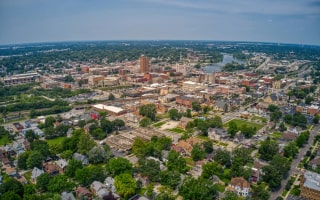
Aurora is one of Colorado's largest and most diverse cities and offers many outdoor recreational opportunities, including award-winning golf courses, nature centers, and over 100 parks. The city is also supported by a robust job base, quality healthcare, and easy access to Denver International Airport.
Aurora, Colorado, has a population of 403,130. Despite being a single and unified city government, Aurora's residents live across three counties: about 85% in Arapahoe County, 12% in Adams County, and a small portion (1%) in Douglas County. The city has 147,745 housing units, with 140,590 occupied and 7,155 unoccupied. The city has a mix of single-family homes, townhomes, condos, apartments, and accessory dwelling units (ADUs). Some housing styles include Ranch, Colonial Revival, Tudor Revival, and Craftsman homes.
The average home price in Aurora, CO, is $473,825, representing a decline of about 3.9% from the past year. However, actual home values vary significantly depending on the neighborhood. Here are examples of home prices for different neighborhoods in Aurora, CO:
- Adonea $551,671
- Cross Creek $548,546
- Murphy Creek $550,948
- Thunderbird Estates $828,181
- Tower Triangle $423,888
- Traditions $568,316
The Aurora, Colorado, real estate market remains a competitive and attractive one for buyers and investors. While there have been modest fluctuations in house prices over the years, homes typically go under contract within 26 days of listing, and more than 30% of properties are still selling above their listing price.